
Top Stories
12 Football Records that will be never Broken
Some football records are simply unbeatable. From staggering goal streaks to legendary unbeaten runs.


Football is full of incredible records, but some records are unbreakable. These football records have stood the test of time, and it’s hard to imagine anyone breaking them. From record attendence to most goals. These records are etched in history. They represent moments of greatness that pushed the limits of the game.
Here are 12 football records that might never be broken, and the stories behind them that continue to amaze fans worldwide.
12. Record Attendance: Brazil’s Heartbreak in 1950
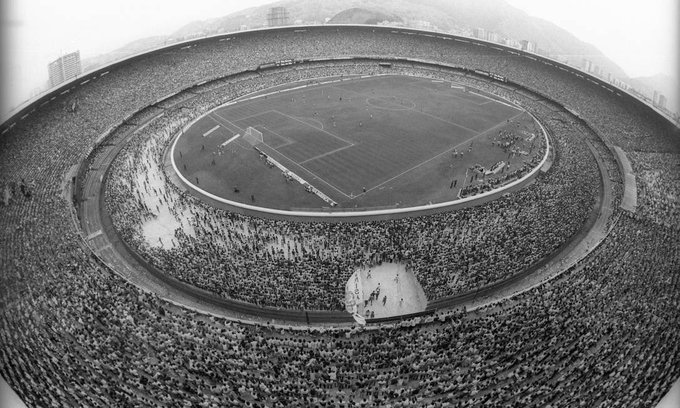
In 2014, Brazil’s 7-1 loss to Germany was a shocking moment in football history, but believe it or not, it wasn’t their most embarrassing World Cup defeat. Let’s go back to 1950 when Brazil hosted the World Cup, just like they did in 2014. They were confident of winning it all. All they needed was a draw against Uruguay in their final match to secure the World Cup. The local fans were sure of victory. The mayor of Rio de Janeiro even praised the team, saying they would be champions in a matter of hours.
In preparation for their win, 22 gold medals were crafted with each player’s name engraved on them. The entire nation was eagerly waiting to witness Brazil’s first World Cup victory. A record-breaking crowd of 199,854 people filled the Maracanã Stadium to watch their heroes. The roar of the crowd was thunderous when Brazil took an early lead. However, Uruguay had different plans and, against all expectations, they scored two goals in the second half, snatching the World Cup from Brazil’s grasp. By the end of the match, the all-time record crowd was in tears of despair.
11. Most Goals in a Calendar Year: Messi’s Magical 91

Lionel Messi, who has won eight Ballon d’Or awards and four Champions League titles, has a truly amazing achievement in his career. In 2012, he did something incredible. There was a record for the most goals scored in a single year, held by Gert Müller with 85 goals in 1972. Well, 50 years later, Messi broke that record in just 69 games. He scored 91 goals. To put it simply, Messi outdid everyone’s expectations, even in a video game, these numbers would seem unreal, but Messi made it happen.
10. Biggest International Victory: Australia’s Dominance in 2001
Australia’s soccer history mainly involved playing in the Oceania Football Confederation. However, things changed in 2001. Australia thought they should be in the final round of World Cup qualifiers, but the officials disagreed. To reach the 2002 World Cup in Japan and South Korea, Australia had to play teams like Tonga and Fiji.
Australia did well, winning their first game against Tonga 22-0. But something strange happened. American Samoa, who weren’t expected to win, had visa problems and had to play with young and inexperienced players, including three fifteen-year-olds. Australia didn’t hold back and led 16-0 at halftime, eventually winning 31-0. Archie Thompson scored a record-breaking 13 goals. What made it even more unbelievable was that Australia was playing with their backup team.
Because of this, Australia decided to look for tougher competition and switched to the Asian confederation.
9. Most Goals by a Goalkeeper: Rogerio Ceni’s Unique Legacy

Rogerio Ceni, the Brazilian goalkeeper, left a remarkable mark by scoring 131 goals while playing for Sao Paulo. Ceni possessed an exceptional right foot, allowing him to score powerful and precise free kicks. He was even the one to take penalties for his team. Although he never managed to score a goal for Brazil’s national team, he was a valuable member of the squad that clinched the 2002 World Cup.
8. Fastest Hat-Trick: Tommy Ross’s Magical 90 Seconds
In 1964, something amazing happened in Scottish football. A young player named Tommy Ross, who had a regular career with teams like Ross County, York City, Peterborough United, and Wigan Athletic, did something extraordinary. In one game against Nan County, he scored three goals in just 90 seconds. It was like a magical moment in football, even though he wasn’t a big superstar.
7. Most Red Cards in a Match: Argentine Mayhem in the Fifth Tier
Local derbies around the world can be intense, but Argentina takes it to a whole new level. The rivalry between Boca Juniors and River Plate is famous worldwide, but let’s go down to the fifth tier of Argentine football.
In March 2011, two smaller teams from Buenos Aires, Claypole and Victoriano Arenas, faced off. Both teams were eager to win, and their emotions got the best of them. Two players were sent off in the first half, but things got wild after halftime.
It all started with a heated confrontation between two players after a tough tackle, and then their teammates joined in. Even the coaches got involved. The craziest part? The fans jumped into the chaos, and within seconds, a full-blown brawl erupted. The poor referee had no choice but to watch.
By the time the fight calmed down, the referee had shown a whopping 36 red cards! Every single player on the field, along with coaches and substitutes from both teams, got sent off. It was pure mayhem.
6. Fastest Red Card: Dijehoua’s Unfortunate 7 Seconds
When a substitute enters a late-game scenario, they hope to make an immediate impact. In 2014, Serge Dijehoua had such a chance, but things didn’t go as planned. Gylfadas desperately needed a comeback, trailing 3-1 to Olympiacos Volou with less than 10 minutes of regular time remaining. Their manager sent in Dijehoua, hoping he could turn the tide.
However, what happened next was far from what anyone expected. Just seven seconds after stepping onto the field, Dijehoua accidentally caught an opponent with his right arm. To his complete surprise, the referee showed him a red card, sending him off the pitch. It was a very harsh decision, to be fair to Dijehoua. Nevertheless, he managed to find some humor in the situation, despite the unfortunate turn of events.
5. Longest Distance Goal: King’s 106-Yard Stunner
Football pitches don’t have a set size; FIFA provides minimum and maximum dimensions, but clubs get to decide how big their field is. Take, for example, the Johnny Rock Stadium, home to Cheltenham Town, with a pitch measuring 111 yards long. In 2021, Tom King used every bit of that space to etch his name into history.
In the highest levels of the game, most goalkeepers prefer short goal kicks. However, this was League Two, and King had a different idea. He aimed to boot the ball as far down the pitch as possible. His kick was so powerful that it traveled farther than he even expected, thanks to a strong wind on a cold January night. The ball sailed down the pitch, bouncing just outside the opponent’s box before looping over the opposing goalkeeper and into the net.
What makes this even more remarkable is that King was a staggering 106 yards away from the goal when he struck the ball. This extraordinary feat made it the longest-distance goal of all time. Interestingly, King didn’t celebrate; instead, he calmly walked back to his goal line and tapped the crossbar.
4. Fastest Goal by a Substitute: Bendtner’s 1.8-Second Header
Who do you think holds the record for the fastest goal by a substitute in the Premier League among iconic Arsenal strikers like Thierry Henry, Dennis Bergkamp, or Robin van Persie? Surprisingly, it’s none of them. The honor goes to someone even more legendary.
In a North London Derby match, Arsenal was tied 1-1 with Tottenham. Arsène Wenger made a substitution, and many Arsenal fans were skeptical when they saw Nicholas Bendtner coming on. However, Bendtner surprised everyone by scoring with a powerful header just 1.8 seconds after replacing Emmanuel Adebayor. This goal secured a 2-1 victory for Arsenal.
Arsène Wenger praised Bendtner’s “great traditional English header” after the game.
3. Most Champions Leagues in a Row: Real Madrid’s 1956-60 Domination

In 2016, 2017, and 2018, Cristiano Ronaldo led Real Madrid to an impressive three consecutive Champions League titles. However, more than fifty years ago, the club achieved something even more extraordinary.
The European Cup was established in 1956, and not everyone initially took it seriously. English clubs, for instance, considered it a distraction and initially decided not to participate. In contrast, Real Madrid showed a strong commitment to the competition. Their 1950s team was exceptionally talented, featuring stars like Alfredo Di Stéfano, Paco Gento, Raymond Kopa, Ferenc Puskás, and José Santamaría – all legendary players.
They went on to win the first five European Cup tournaments, establishing themselves as the dominant force in European football. Since then, Real Madrid has remained the most successful club in the competition’s history. Achieving five Champions League titles in a row is an accomplishment that seems unlikely for any team in the foreseeable future.
2. Most Clean Sheets: Buffon’s Milestone in Serie B
Ever wondered why it’s called a “clean sheet” in football when a team doesn’t let in any goals? Well, let’s find out. But first, let’s give a big shoutout to the goalkeeper who’s the ultimate champion at this – Gianluigi Buffon. He’s won the World Cup and was at his best in the 2000s and 2010s. If you thought it was someone else like Ike Cassius, you guessed wrong.
In February 2022, Buffon reached a milestone by keeping his 500th career clean sheet while playing for Palmer in Serie B. It’s pretty amazing considering he made his pro debut when he was just 17, and now, at 44, he’s still out there on the field every week. His record will probably stand forever.
And here’s the fun fact: They call it a “clean sheet” because in the old days, reporters used white sheets of paper to write down the scores. If your sheet stayed clean (with no goals conceded) at the end of the match, it meant your team didn’t let in any goals.
1. Most World Cup Wins: Pelé’s Unmatched Record
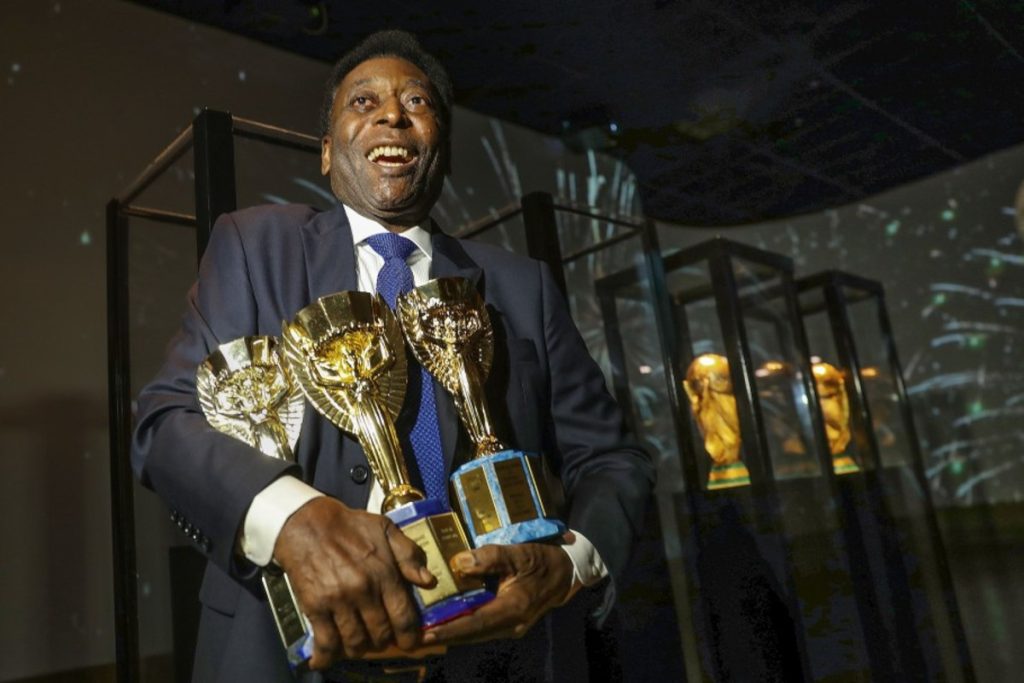
Do you remember when Kylian Mbappé burst onto the scene during the 2018 World Cup at the age of 19? Well, he wasn’t the first teenager to shine on the biggest stage. Compared to Pelé in 1958, Mbappé was relatively older. Pelé was just 17 when Brazil won the Jules Rimet Trophy in 1958. He was also part of the team that won the World Cup again four years later, and in 1970, Pelé secured his third World Cup victory.
Although that tournament was over half a century ago, no one has come close to matching Pelé’s record. The legendary Brazilian played in four World Cups, giving him an astonishing tournament-winning rate of 75 percent. If France wins the World Cup in Qatar, perhaps Mbappé could match Pelé’s record, but beating it would be quite a challenge. We’re not sure if anyone will ever achieve that.




World Cup 2026 will be the largest edition of the tournament ever held, featuring 48 national teams competing across Canada, Mexico and the United States.
The tournament runs from 11 June to 19 July 2026, with a total of 104 matches played across the group stage and knockout rounds.
Winning Whistle brings you World Cup 2026 full match schedule in your local time.
📅 Tournament Overview
🏆 Dates: 11 June – 19 July 2026
⚽ Teams: 48 Teams
📍 Hosts: United States, Canada and Mexico
📊 Total Matches: 104 Matches
🏟️ Venue: 16
World Cup 2026 – Group & Teams
| Group | Teams | |||
|---|---|---|---|---|
| A | 🇲🇽 Mexico | 🇿🇦 South Africa | 🇰🇷 Korea Republic | 🇨🇿 Czechia |
| B | 🇨🇦 Canada | 🇧🇦 Bosnia & Herzegovina | 🇶🇦 Qatar | 🇨🇭 Switzerland |
| C | 🇧🇷 Brazil | 🇲🇦 Morocco | 🇭🇹 Haiti | 🏴 Scotland |
| D | 🇺🇸 United States | 🇵🇾 Paraguay | 🇦🇺 Australia | 🇹🇷 Turkiye |
| E | 🇩🇪 Germany | 🇨🇼 Curacao | 🇨🇮 Ivory Coast | 🇪🇨 Ecuador |
| F | 🇳🇱 Netherlands | 🇯🇵 Japan | 🇸🇪 Sweden | 🇹🇳 Tunisia |
| G | 🇧🇪 Belgium | 🇪🇬 Egypt | 🇮🇷 Iran | 🇳🇿 New Zealand |
| H | 🇪🇸 Spain | 🇨🇻 Cape Verde | 🇸🇦 Saudi Arabia | 🇺🇾 Uruguay |
| I | 🇫🇷 France | 🇸🇳 Senegal | 🇮🇶 Iraq | 🇳🇴 Norway |
| J | 🇦🇷 Argentina | 🇩🇿 Algeria | 🇦🇹 Austria | 🇯🇴 Jordan |
| K | 🇵🇹 Portugal | 🇨🇩 DR Congo | 🇺🇿 Uzbekistan | 🇨🇴 Colombia |
| L | 🏴 England | 🇭🇷 Croatia | 🇬🇭 Ghana | 🇵🇦 Panama |
World Cup 2026 Live Dashboard

The wait is over! The FIFA World Cup 2026 Group Stage Draw is being held at the prestigious John F. Kennedy Center in Washington DC, USA. This historic edition of the World Cup—jointly hosted by USA, Canada, and Mexico—features an expanded 48-team format, making it the biggest World Cup ever.
FIFA World Cup 2026: Tournament Overview
- Host Countries: USA, Canada, Mexico
- Total Teams: 48
- Groups: 12
- Final Date: 19 July, 2026
- Opening Match Venue: Estadio Azteca
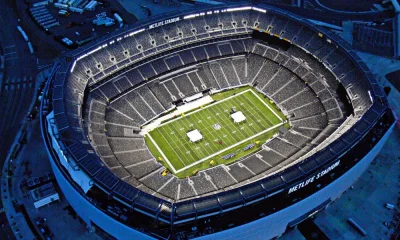
- Final Venue: Metlife Stadium
Lets have a look at FIFA World Cup 2026 host Cities and Stadiums.
FIFA World Cup 2026 Group Stage Draw
Group A
- Mexico
- South Africa
- South Korea
- Denmark/Macedonia/Czechia/Ireland
Group B
- Canada
- Italy/Northern Ireland/Wales/Bosnia
- Qatar
- Switzerland
Group C
- Brazil
- Morocco
- Haiti
- Scotland
Group D
- USA
- Paraguay
- Australia
- Turkiye/Romania/Slovakia/Kosovo
Group E
- Germany
- Curacao
- Ivory Coast
- Ecuador
Group F
- Netherland
- Japan
- Ukraine/Sweden/Poland/Albania
- Tunisia
Group G
- Belgium
- Egypt
- Iran
- Newzeland
Group H
- Spain
- Cabo Verde
- Saudia Arabia
- Uruguay
Group I
- France
- Senegal
- Iraq/Bolivia/Suriname
- Norway
Group J
- Argentina
- Algeria
- Austria
- Jordan
Group K
- Portugal
- DRC/Jamaica/New Caledonia
- Uzbekistan
- Colombia
Group L
- England
- Croatia
- Ghana
- Panama
World Cup 2026 Format Explained
The 2026 World Cup marks the first-ever 48-team format. The new system includes:
- 48 Teams, 12 Groups, 104 Matches
- Eight 3rd best team will qualify to knock out stage.
- 32 teams will enter Round of 32
- No more early elimination after two matches
- More knockout games, more excitement

Cristiano Ronaldo is apparently in line for a new record contract with his club Al-Nassr ! As the Spanish newspaper “Marca” reports, the Portuguese superstar is set to extend his contract until 2026 and even receive a share of the club’s assets. With the option for a further season.
Ronaldo could earn around €183 million per season. This would be less than the current €200 million, but with a five percent stake in the club, the contract could still be unbeatable from a financial perspective.
This also puts an end to the crazy idea that Cristiano Ronaldo could return to Real Madrid this summer for the Club World Cup 2026. The portal “Eldesmarque” reported this.
Now Ronaldo will probably stay at Al-Nassr.
The Portuguese international moved from Manchester United to the desert in the winter of 2022, initially signing for two and a half years. The proceeds at the time were a so-called signing fee of €100 million and an annual salary totaling €200 million. At the time, it was the most lucrative contract in football history.
At the beginning of the year, the 2016 European champion spoke about a possible retirement:
I’m planning my retirement, and it will happen in a year or two. I’ll be 40 soon. I really want to enjoy this; as long as I feel motivated, I’ll keep going. The day I no longer feel motivated, I’ll retire.
Now “Marca” reports that Ronaldo has made strengthening the team with new signings a condition for the extension.
But things aren’t going well for CR7 and Al-Nassr in the Saudi Pro League. The club is currently in third place, nine points behind leaders Al-Hilal and FC Ittihad.

 Beauty & The Game2 years ago
Top 10 Hottest Female Football Players in 2025
- Beauty & The Game2 years ago
Top 10 Hottest Football WAGs in 2025
- Top Stories2 years ago
Cristiano Ronaldo’s Car Collection: A $20 Million Dollar Fleet
- Stadiums2 years ago
2026 World Cup Host Cities & Stadiums – Full Updated List & Details
- Top Stories2 years ago
Lionel Messi Car Collection 2026: How Many Cars Does Messi Have?
- Top Stories2 years ago
Top 10 Most Expensive Football Trophies in the World (2026 Updated)
- Stadiums2 years ago
World’s Biggest Football Stadiums: A Look at the Future Giant in Morocco
- Stadiums2 years ago
UEFA EURO 2028 Stadiums : UK-Ireland




Hair Cuts
October 23, 2024 at 7:36 am
Thank you for your help and this post. It’s been great.